In the Roaring Fork Valley, soaring real estate prices have long outpaced local wages, making the path to stable housing particularly challenging. “The reality is, if you work in the Roaring Fork Valley, you cannot afford to live in the valley,” says Darla Callaway, Director of Habitat for Humanity Roaring Fork Valley. With The Carter, Habitat set out to challenge that reality—not by building from the ground up, but by reimagining space that already existed.
Formerly known as the L3 Lofts, the 88-unit multifamily property in Glenwood Springs served the higher-end rental market. The units were well-built but characterless—“very beige,” as Callaway describes it. When Habitat acquired the building with the intent of converting it into affordable homeownership, the organization entered new territory. This was not the typical Habitat model of constructing two- or three-bedroom homes for families. Instead, The Carter—renamed in honor of President Jimmy Carter’s enduring legacy with Habitat for Humanity—offers studios, junior one-bedrooms, and one-bedroom units for a broad cross-section of the community: from retirees to young professionals, parents and children, and even homeowners who were previously homeless.
Callaway turned to CCY Partner Maura Trumble for guidance. While revenue from unit sales made the overall building conversion possible, no funding had been allocated for the shared spaces, which were minimal and underdefined. It became clear that without a thoughtful plan, the building would function as a collection of units rather than a cohesive residential community.
CCY’s role extended beyond surface upgrades. Trumble, alongside architect Jessica Lorenz, applied their expertise in interior space planning, circulation, and community-centered design to assess how the building was actually being used. The team developed a clear, workable framework—complete with diagrams, finish studies, and furniture layouts—that Habitat staff and volunteers could follow. The intent was to reorganize and define common areas in a way that supported interaction, ownership, and daily life.
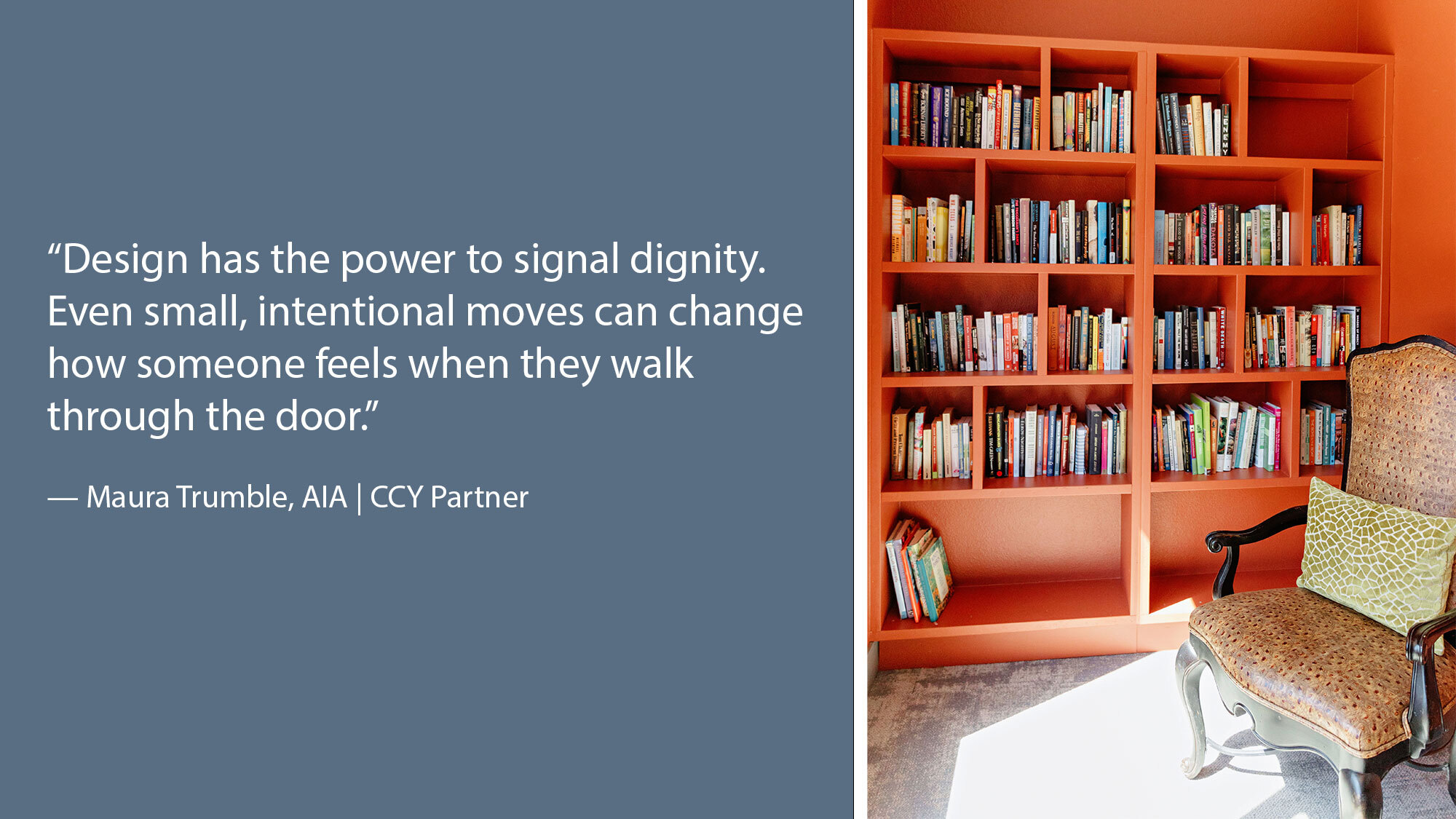
“The opportunity was about uncovering latent potential—finding those overlooked in-between spaces and turning them into places where residents could see themselves reflected,” says Maura Trumble, Partner at CCY Architects. “Design has the power to signal dignity. Even small, intentional moves can change how someone feels when they walk through the door.”

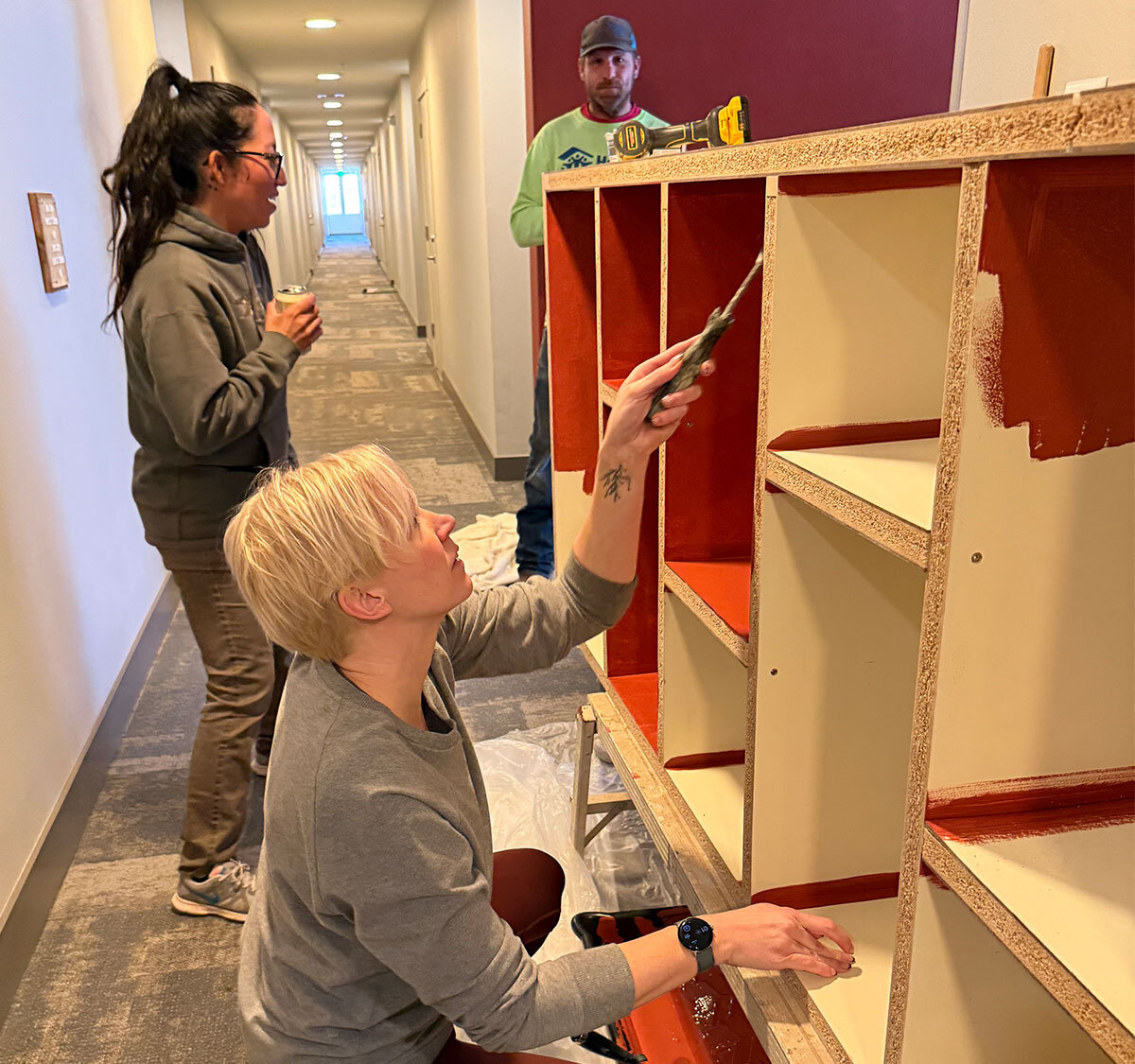
CCY has donated design services and construction support, working alongside Habitat volunteers to implement the plan. Former leasing offices, awkward alcoves, and undefined corridors were reassigned new functions and reconfigured to serve residents more effectively.
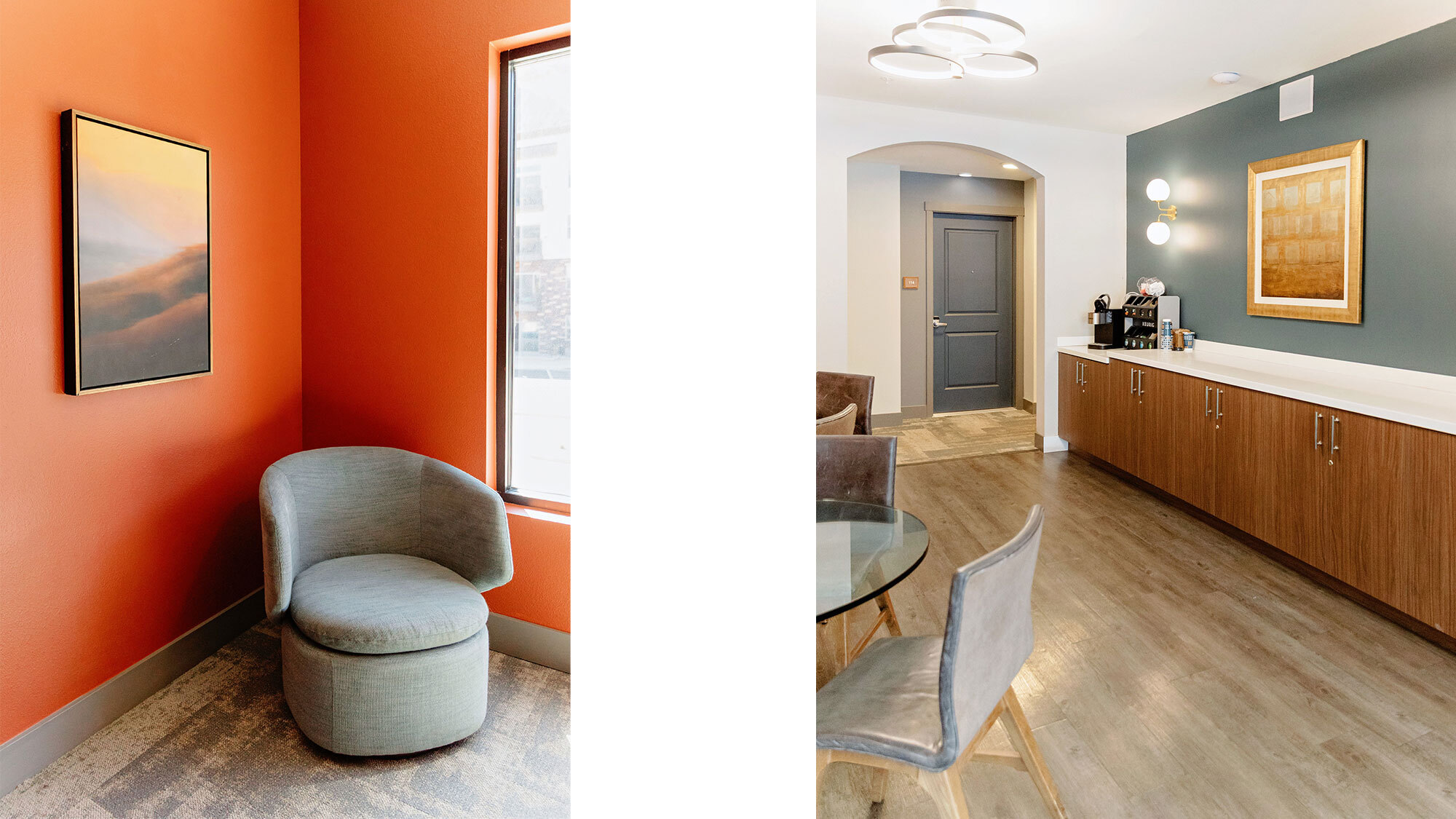
Materials and furnishings were sourced almost entirely from Habitat ReStore locations—home improvement stores that accept donations of new and gently used furniture, appliances, housewares, and building materials. The result is an eclectic, layered aesthetic: pieces with history, texture, and patina. The palette looks outward to the Roaring Fork Valley for inspiration. A deep blue recalls the striking waters of Hanging Lake, while a rust-red tone reflects the layered cliffs that define Glenwood Springs. The result is a subtle connection between the interiors and the landscape beyond.
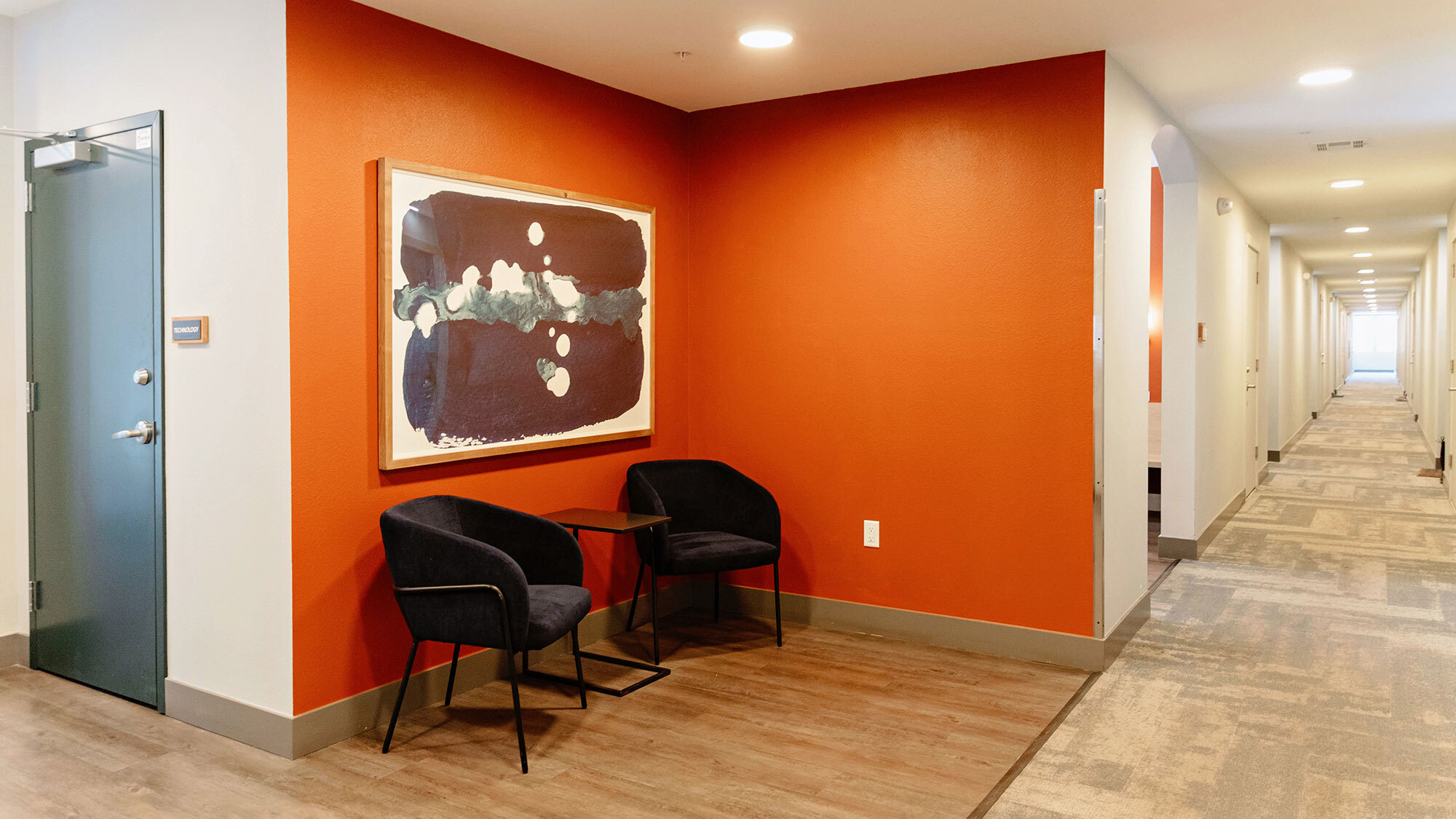
The once-underutilized lobby was opened to encourage gathering, transforming a former leasing office into a welcoming living room. A mailroom defined by awkward, single-person booths was rethought and opened up. The second floor now hosts a shared library—“give a book, take a book”—stocked in part by the personal collections of Habitat board members. On the third floor, a yoga and exercise room offers residents space to recharge.
“The biggest win,” Callaway reflects, “was taking these nooks and crannies that had no function or character and finally giving them a purpose.” Art has become part of that evolution, with conversations underway alongside local arts organizations and the possibility of an artist-in-residence program.
For CCY, The Carter represents a direct investment in the community where the firm lives and works. For Habitat, the project marks a necessary expansion of their model—serving the “messy middle” of residents who earn too much for traditional subsidies but are priced out of the market. At The Carter, the focus is not just on the number of units delivered, but on creating an environment where residents feel a sense of ownership and stability.